The architecture of survival
Family violence, cultural dislocation, sensory intensity and the early lessons of concealment.
From a Violent Childhood to the Queensland Drug Squad and a Forty-Year Search for Clarity
Amazon handles payment, format selection, delivery and returns.
International and US buying options →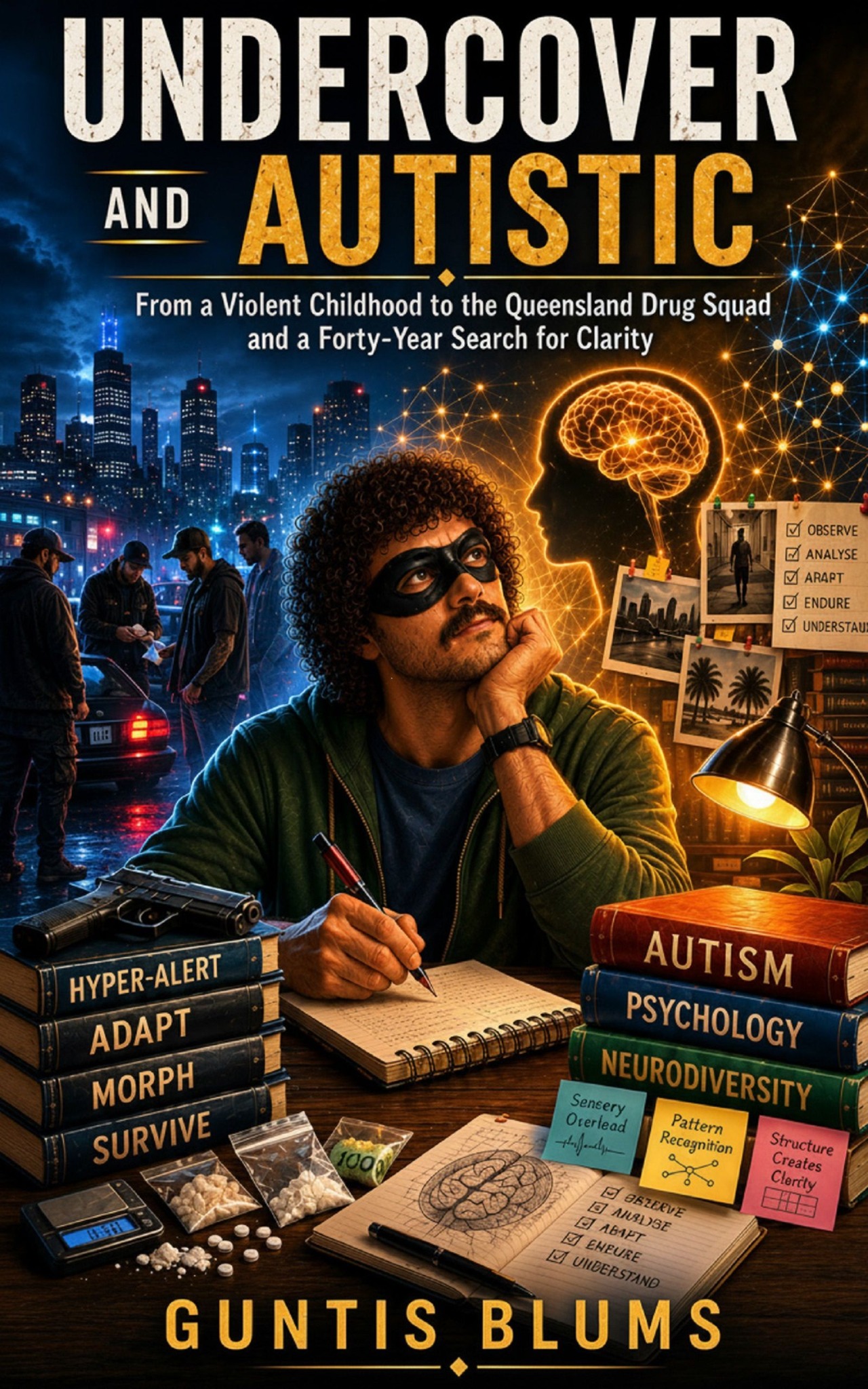
Undercover and Autistic is an Australian memoir by former Queensland police officer Guntis Blums. It brings together late-life autism recognition, childhood survival, autistic masking and the unusual demands of undercover police work.
Beginning in a home where safety depended on watching from the edges, Guntis Blums traces how childhood adaptations became professional abilities. Observation, restraint, pattern recognition and emotional distance found an unlikely purpose in the Queensland Drug Squad. The same mask that once helped a child disappear later helped an undercover officer survive.
But competence did not prevent injury. The memoir follows the accumulated cost of dangerous work, PTSD, medical retirement and a long search for an explanation that remained incomplete even after formal study in psychology.
When the possibility of autism emerged in his early seventies, it could not change the life already lived. It made its underlying pattern visible.
The memoir is written for readers of true undercover and Australian police accounts, as well as autistic adults and people trying to understand a lifetime of masking and difference.
It does not suggest that autism explains every decision or that all autistic people share one experience. It shows how recognition late in life changed the meaning of experiences carried for decades.
Read why late recognition matters →Family violence, cultural dislocation, sensory intensity and the early lessons of concealment.
How masking and peripheral attention became operational assets in undercover work.
What institutions see when a person performs, and what they miss when endurance conceals injury.
Late recognition as a more truthful interpretation, not a cure, rescue or rewriting of history.
Available now